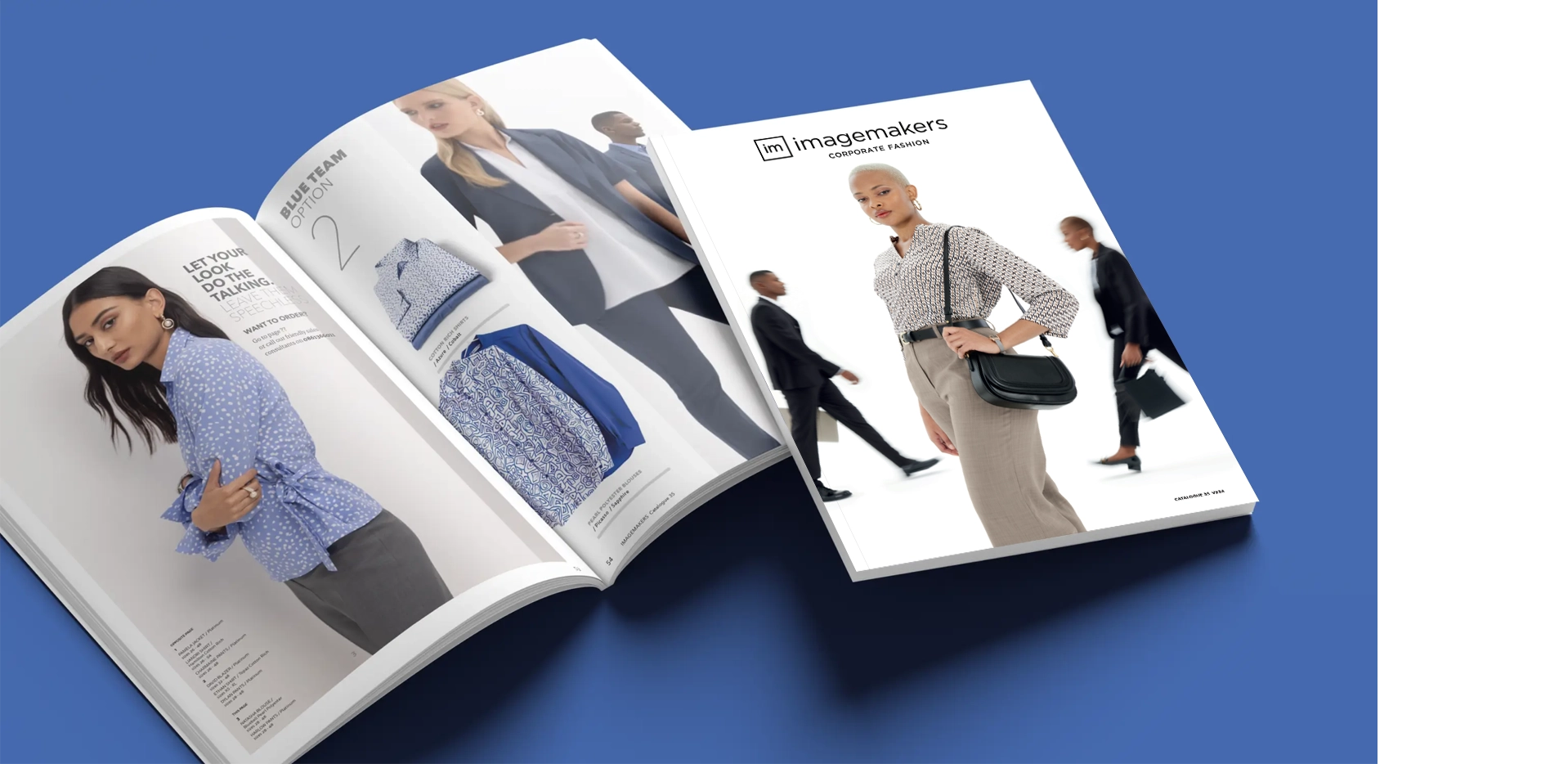


Let's take a step back. Imagine you're the one responsible for ordering work clothing for 300 employees (could be more, could be less…). You've reviewed the glossy catalogues, compared prices, selected the styles and approved the samples. The supplier looks professional, the quotation is competitive and everyone seems genuinely excited. Tick, tick and tick. Big back pats on the way. Happy days.
Then the clothing arrives.
Some employees find their garments uncomfortable - their constant neck scratches and sighs give it away. A few sizes aren't right - cue arms extended further than a sloth reaching for the thickest twig. And with the microscope out, the fabric now looks different under office lighting. Time for two stressful phone calls - one to the supplier, the other to the MD.
Thankfully after 30 emails and 5 phone calls all is resolved and it's YOU that was at fault for not checking the agreed garment specifications, because let's face it, you had accepted the manufacturing tolerances, the quality standards, the delivery conditions as well as the procedures for returning or replacing 'defective garments' when you signed the order form. And, perhaps most importantly, you also should have established exactly who would be responsible if the finished clothing didn't meet expectations?
Great, 'resolved' then… however, six months later, when another 30 employees join, you discover that your chosen styles are no longer available. After taking the week off to attend an anger management course, you finally admit to your ChatGPT therapist that you may have made a mistake in choosing 'Stitch-Up Work Wear Suppliers' for your team uniform needs.
We've painted a deliberately depressing picture here, but it makes an important point. Choosing a corporate clothing supplier isn't just about finding garments you like at a price you're happy with. It's about finding people you can trust, who understand your business, take your requirements seriously and have that all-important 'can-do' attitude. A team who'll work with you, solve problems when they arise and make sure your team is just as well looked after next year as it is today.
But before we go any further, here's something that might save you a lot of headaches.
We've put together a free, practical 10-point checklist to help you ask the right questions, compare suppliers and avoid some potentially expensive mistakes before signing that purchase order.
Download Your Free 8-Point Corporate Clothing Supplier Checklist
Save it, print it or share it with your HR or procurement team. It might just be the most useful thing you do before ordering your company's next wardrobe!
What should you look for in a corporate clothing supplier?
A dependable supplier should without question (and gladly) demonstrate consistent garment quality, sizing and fitting support, reliable delivery, clear quality-control procedures and the ability to supply matching garments as your workforce changes.
That sounds straightforward. But the real differences between suppliers often only come to light when you examine how they operate, what they can guarantee and how they respond when something doesn't go according to plan (refer to first few paragraphs above).
Here are six areas every business buyer should investigate:
1. Who actually manufactures your clothing?
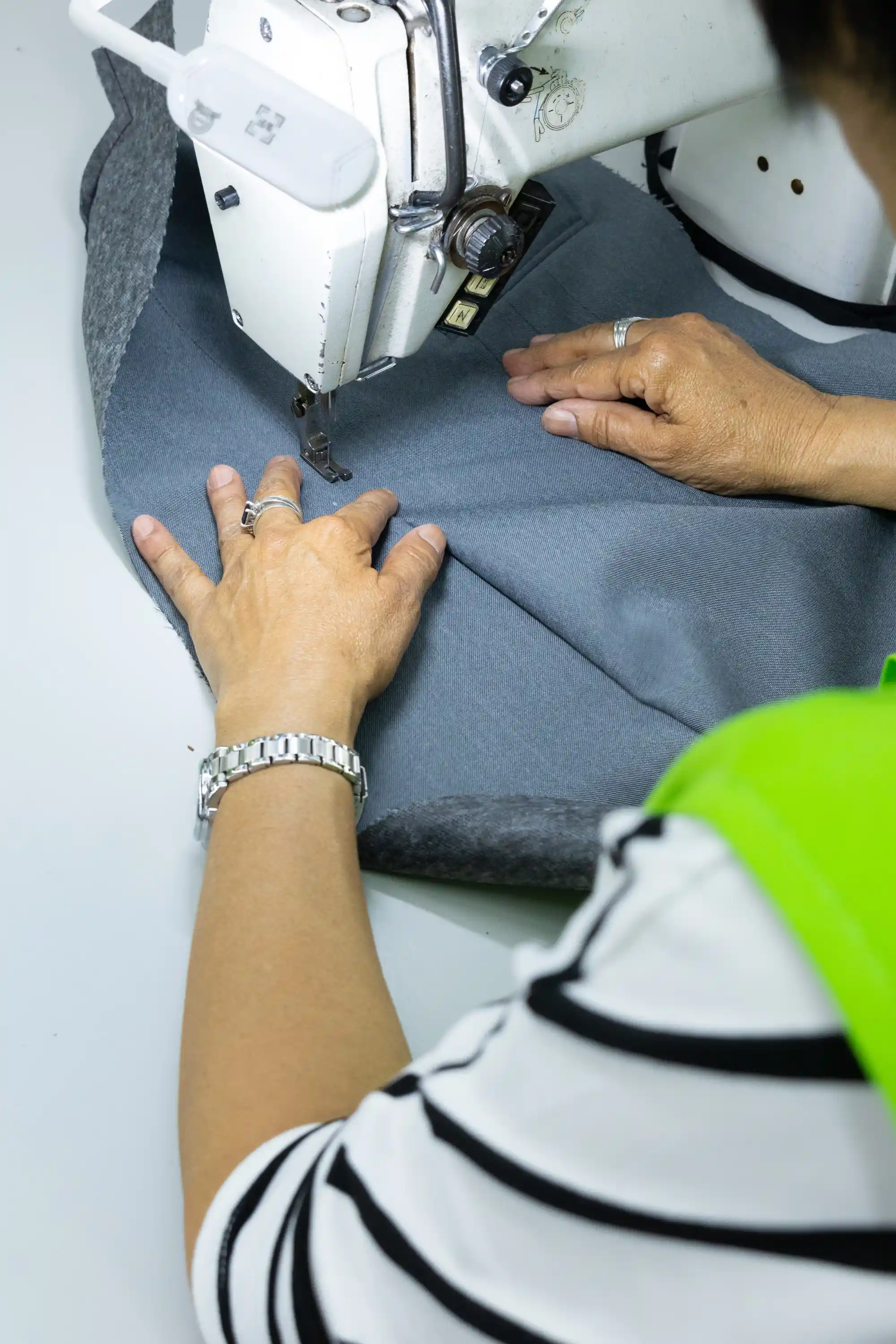
There's an important distinction between a South African clothing retailer, an importer, a business that outsources production and a manufacturer operating its own facility. None of these models is automatically better than the others, what matters is understanding who makes the garments, who controls their quality and who takes responsibility for the finished product.
Simply ask whether your supplier manufactures locally or imports finished clothing or uses a combination of both production arrangements. Whether local or abroad, find out where the garments are made, how production is supervised and what happens if specifications need changing.
South African regulations include country-of-origin labelling requirements for clothing and textiles so you’ll easily see if it's made in SA or not.
Remember though that 'locally manufactured' doesn't mean every component must originate in South Africa. A garment made in Cape Town using imported fabric (which is often the best) can still represent genuine South African manufacturing.
At Imagemakers, we've manufactured corporate clothing in Cape Town since 1982, combining local production expertise with carefully selected fabrics. Shameless punt over
Back to the action: Understanding the manufacturing process should be your starting point when evaluating corporate clothing manufacturers in South Africa.
2. How can you tell whether work clothing will actually last?
A garment can look excellent when it's new. The more meaningful test is how it performs after repeated washing and regular wear.
Think about the demands of a normal working week. Employees sit, walk, bend, travel, interact with customers and wear their clothing for hours at a time. Fabrics need to remain comfortable, seams need to withstand movement and garments should retain an acceptable appearance throughout their intended working life.
Before placing a substantial order, ask what evidence the supplier can send you about fabric performance, shrinkage, colourfastness and construction quality.
These aren't simply matters of opinion. Textile testing standards exist for assessing measurable characteristics. For example, ISO 5077 addresses dimensional changes following washing and drying, while other recognised methods assess colourfastness and fabric performance.
You absolutely do not need to become a textile-testing expert to ask or analyse this. It's your supplier who should understand these considerations and explain how they're addressed. It's also worth asking whether the garments have been assessed under conditions relevant to their intended use. Clothing worn occasionally in an office faces different demands from garments worn throughout long hospitality shifts. Ask and make sure you are comfortable with the answer. You are never the problem, and your many questions no matter how lame you think they are, should always be answered to your satisfaction. Not theirs.
Always remember the rule, 'cheap' is often a synonym for 'false economy' - here's a good article on the subject, Fast Fashion's Biggest Lie? Cheap Clothes Save You Money.
3. How should a business organise clothing sizes and fittings for a large team?
This is where a seemingly simple clothing purchase can become a substantial administrative exercise. Imagine coordinating office clothing for employees across Cape Town, Johannesburg and Durban. Some work at head office, others at regional branches, and not everyone can attend a fitting on the same day.
How will individual sizes be established? Who records each employee's requirements? What happens if someone orders the wrong size? And how are new employees accommodated?
Here's how: Put the ball in their court. Simply ask the supplier how they manage sizing, fitting arrangements, order records and replacements. Their answers should reflect the size and geographical spread of your workforce. Ask them to give you an example. And only when you're happy that they have done this before (successfully) do you move to the next point.
Next point: make sure the supplier maintains detailed records of your company's previous orders, garment specifications, sizes, styles and ongoing requirements.
These records can make future orders considerably easier, particularly when employees need replacement garments or a business expands.
Because a dependable clothing programme should make life easier for HR, procurement and operations teams, not create another spreadsheet nightmare.
4. What happens when your company needs more uniforms next year?
This is perhaps the most underestimated part of choosing the right supplier. Businesses rarely remain the same size - employees join and leave, departments expand, branches open and garments eventually need replacing.
But what happens if your original clothing collection has been discontinued? Can you still obtain matching trousers, shirts, blouses or jackets? Will the fabrics and colours remain consistent? Are the sizing specifications unchanged? And how long will additional orders take to arrive; the new team members arrive next week!
For any size organisation purchasing team clothing, continuity of supply should be just as important as the initial delivery. This is particularly relevant for companies with customer-facing employees. Maintaining a consistent professional appearance undermines the brand’s image when different branches are wearing slightly different versions of the same uniform.
So, ask about collection availability, replenishment lead times, minimum order quantities and whether the supplier can support an ongoing clothing programme.
A supplier that understands your longer-term requirements can help you plan ahead rather than repeatedly starting from scratch.
5. What should be agreed before approving bulk garment production?
Approving a sample is an important step, but it shouldn't be the end of the conversation. Before bulk production begins, establish precisely what is being approved. That includes fabric composition, garment measurements, colours, construction details, acceptable manufacturing tolerances and any agreed quality-testing requirements.
The supplier should also explain how non-conforming garments, incorrect quantities, sizing disputes and delivery problems will be handled.
The relevant specifications and acceptance criteria should be documented and agreed by both parties.
Why does this matter?
Because discovering a problem after hundreds of garments have been delivered can turn an otherwise straightforward purchase into a stressful, time-consuming disagreement about what was ordered, what was approved and what constitutes acceptable quality. Remember, the supplier is there to remove stress, not add to it!
You may hear that the garments meet the approved pre-production sample or fall within agreed manufacturing tolerances. Those may be legitimate considerations, but they should never be used to avoid addressing genuine defects or failures to meet agreed specifications.
A professional supplier should always welcome clear specifications and sensible quality questions because they protect both the customer and the manufacturer.
6. How do you compare the true cost of corporate wear?
Remember our point above on 'false economy' - simply put, the lowest quotation isn't always the most economical option.
Suppose one garment costs R350 and another costs R500. The cheaper garment may represent excellent value if it performs well and remains suitable for its intended use. But if it requires more frequent replacement, becomes uncomfortable or creates additional administrative work, the initial saving can quickly disappear.
Consider a simple hypothetical example: a R400 garment worn 100 times costs R4 per wear. A R300 garment replaced after 30 wears costs R10 per wear.
That's not a claim that imported garments wear out faster than locally manufactured alternatives. It's simply a reminder that purchase price and long-term value are not always the same thing.
The more useful calculation considers the cost of keeping employees appropriately dressed throughout the clothing programme, including garment durability, replacement frequency, fitting arrangements, delivery costs and ongoing availability.
And different working environments have different requirements: Office wear for a professional services team may prioritise comfort, fit and presentation. Hospitality clothing may need to accommodate movement, frequent laundering and long shifts. Reception teams may need consistent styling across several branches.
The right supplier should understand those differences rather than offering exactly the same solution to every workplace.
Can a Cape Town clothing manufacturer supply businesses in Johannesburg and elsewhere?
Yes. A manufacturer doesn't need to be based in the same city as every customer it supplies. What matters is whether it has the systems, production capacity, logistics and customer support to manage orders across different locations.
For a Johannesburg business evaluating corporate clothing suppliers in Cape Town, useful questions include delivery arrangements, fitting support, regional service capabilities and how future replenishment orders will be handled. The same applies to companies operating across Pretoria, Durban and other South African cities.
At Imagemakers, although our manufacturing operation is based in Cape Town, we work with businesses across the whole of South Africa. We also deliver to Namibia, Zimbabwe, Botswana and even further afield. We can’t name the European cruise line but if you’ve travelled across Europe you’ve probably seen cruise ship crew in Imagemakers clothing.
So, how do you choose the right corporate clothing supplier in South Africa?
Start with the people who will wear the clothing, not simply the garments in the catalogue.
Understand the working environment, number of employees, fitting requirements, expected garment lifespan and how frequently replacements will be needed.
Then ask prospective suppliers to explain how they'll meet those requirements, both for the initial order and over the following months and years.
Buying locally manufactured clothing can offer advantages, particularly where production flexibility, communication and replenishment are concerned. But being South African-made doesn't automatically guarantee quality, just as an imported garment isn't automatically inferior.
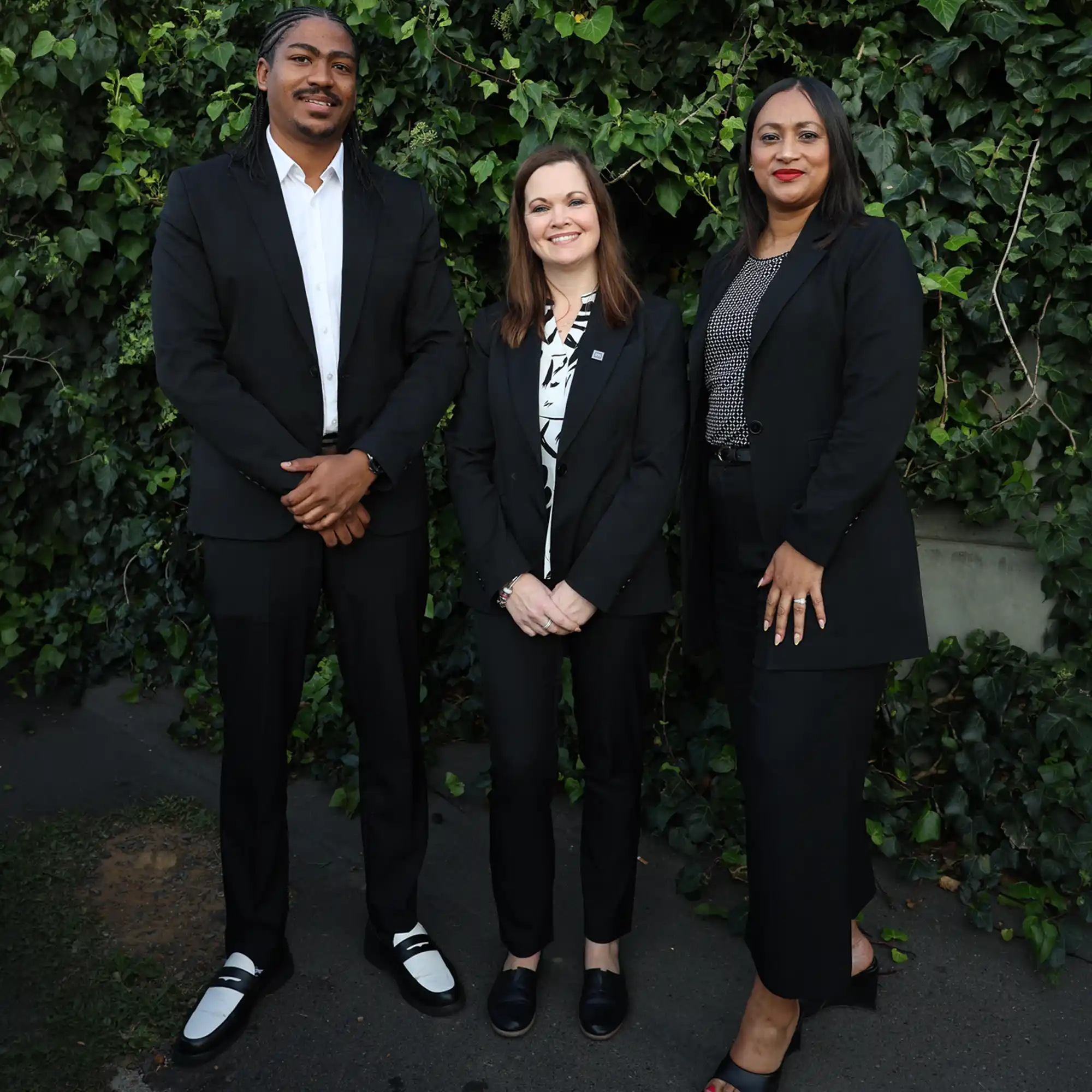
All this being said, it’s really about how a supplier delivers on its promises. At Imagemakers, we've spent more than four decades manufacturing uniforms and professional wear for South African businesses - we believe that supplying corporate clothing should be an exciting and rewarding process from start to finish, it should never be a chore and it should never be stressful - making employees feel comfortable and confident while we make the practical responsibilities of managing a workforce considerably easier is our one and only job.
Sources and further reading
• South African Government - Country-of-origin labelling of clothing and textiles
• ISO 5077 - Textiles: Determination of dimensional change in washing and drying
• Imagemakers - Fast Fashion's Biggest Lie? Cheap Clothes Save You Money