

We uncover the real cost of the fast fashion wardrobe
A R199 shirt looks like a bargain. A R799 shirt looks expensive.
That's where most of us stop doing the maths. And we go out and buy el cheapo or order it online.
But if we think about it logically - without our bargain obsessed brains stuck in a loop - if the cheaper shirt loses its shape, fades, pills or gets relegated to the back of the wardrobe after a handful of wears, while the more expensive one keeps going for years, which one actually cost more? And if the more expensive one is the one we really want to wear… then why are we falling foul of 'false economy' every time it comes to what we wear?
Because Fast fashion has trained us to think about the price we pay today, not what our clothes cost us over their lifetime.
The more useful and far more accurate question should be 'what is the cost per wear'.
And if we apply that common sense thinking to what we wear to work - like uniforms -which are clothes worn for eight hours a day, week after week, washed repeatedly, looking professional every Friday afternoon - the economics of "cheap" start to look very different.
The Real Price Isn't on the Price Tag
The scale of our clothing habit is actually quite extraordinary. According to the Ellen MacArthur Foundation, clothing production roughly doubled in the 15 years to 2015, while the number of times clothing was worn before being discarded fell significantly. That's a worrying trend for our environment!
According to the UN Environment Programme, 92 million tonnes of textile waste are now generated globally every year - the equivalent of a garbage truck full of clothing being dumped or incinerated every single second.
And despite years of warnings about fashion waste, textile production and consumption volumes are still rising, outpacing the progress being made to reduce the industry's environmental impact.
Only 8% of textile fibres used in 2023 came from recycled sources, while less than 1% came from textile-to-textile recycling.
That's an enormous amount of money, material, energy and manufacturing effort going into clothes that have increasingly short-lived lives. It turns out our throwaway fashion habit is good at one thing we really don’t want it to be good at - ironically, it's very good at hanging around, just not the way we want it to hang around.
And it's also why 'cheap' can be such a misleading word. It’s only cheap at face value. It’s not cheap for you and I and it’s not cheap for the environment and the companies mass producing these clothes feel they’ve hit the jackpot - think about this as a business model… increased production runs + cheaper material + massive demand = huge profits.
But let's get back to the false economy part for now. What is affecting you and I in our pockets and why the polyester being pulled over our eyes is costing us more than we ‘bargained’ for.
Let's take two hypothetical work shirts.
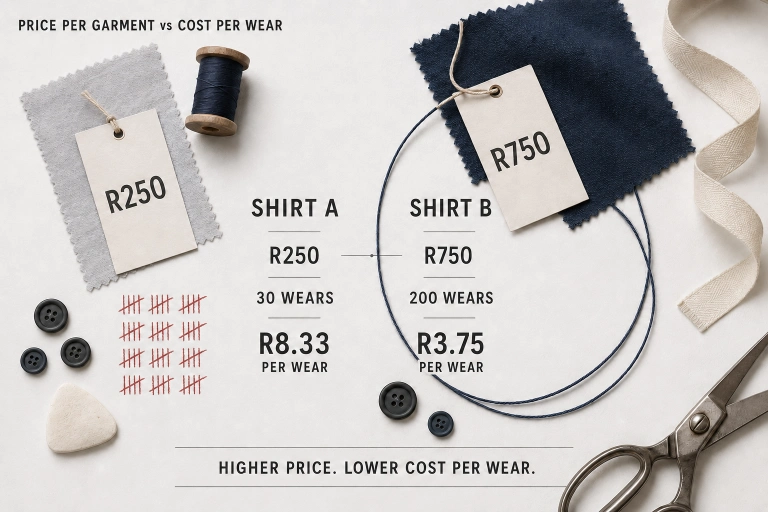
Shirt A costs R250 and gets worn 30 times before it needs replacing. That's R8.33 per wear.
Shirt B costs R750 but gets worn 200 times. That's R3.75 per wear.
Suddenly, the shirt that cost three times as much to buy actually costs half as much when you calculate the real cost (cost per wear).
Those numbers are illustrative rather than an industry benchmark, but the principle is the important part.
When companies buy corporate clothing, the obvious but wrong focus is on the ‘price per garment’. The more commercially useful calculation should really be ‘how long that garment remains wearable, presentable and fit for purpose.’
These aren't clothes waiting in a wardrobe for a Saturday night outing. They are clothes that work for a living.
The Real Test Starts After You Buy It
Almost any new shirt can look impressive on a hanger. A lot of us can feel quality when we touch it or try it on, but most of us don’t make the connection when the ‘feel’ is marginal and the upfront cost is ‘high’.
Real quality only reveals itself later. And this is where fast fashion does a runner and then comes back through your algorithm to convince you to buy another cheap item, because its cheap and looks cool and ‘you can afford it’.
What a con.
Now think about this: what happens after repeated washing? Does the colour hold? Does the fabric retain its shape? Do seams and stress points withstand daily movement? Is it still comfortable after hours of wear? And six months later, does the person wearing it still look as professional as they did on day one?
Because “looked fantastic on a website or in the virtual showroom” isn't much consolation when employees ditch the dishcloths and start wearing their casual clothes to work again.
These are very different considerations from designing replaceable clothing around the next trend.
For companies dressing entire teams, they matter.
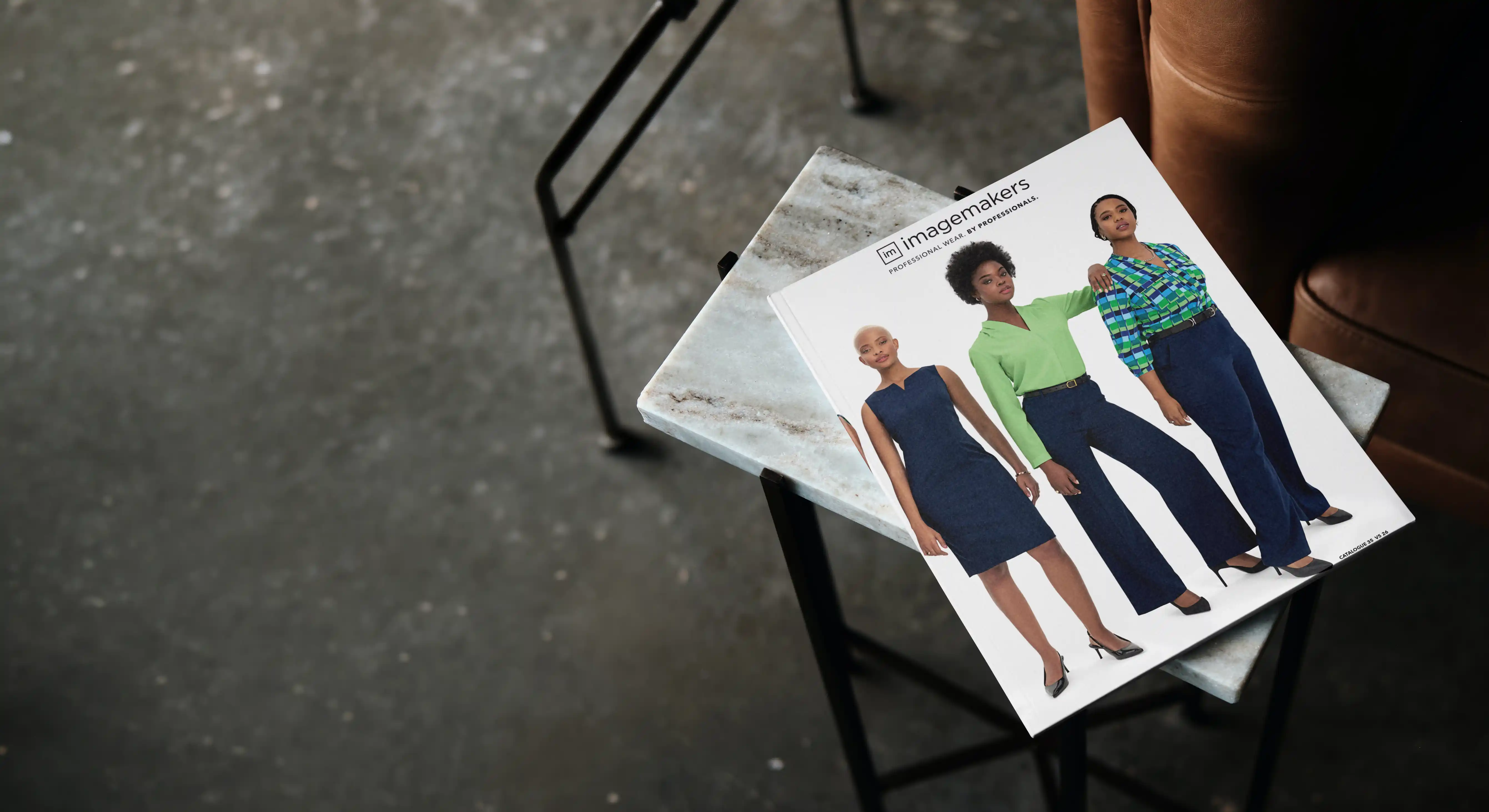
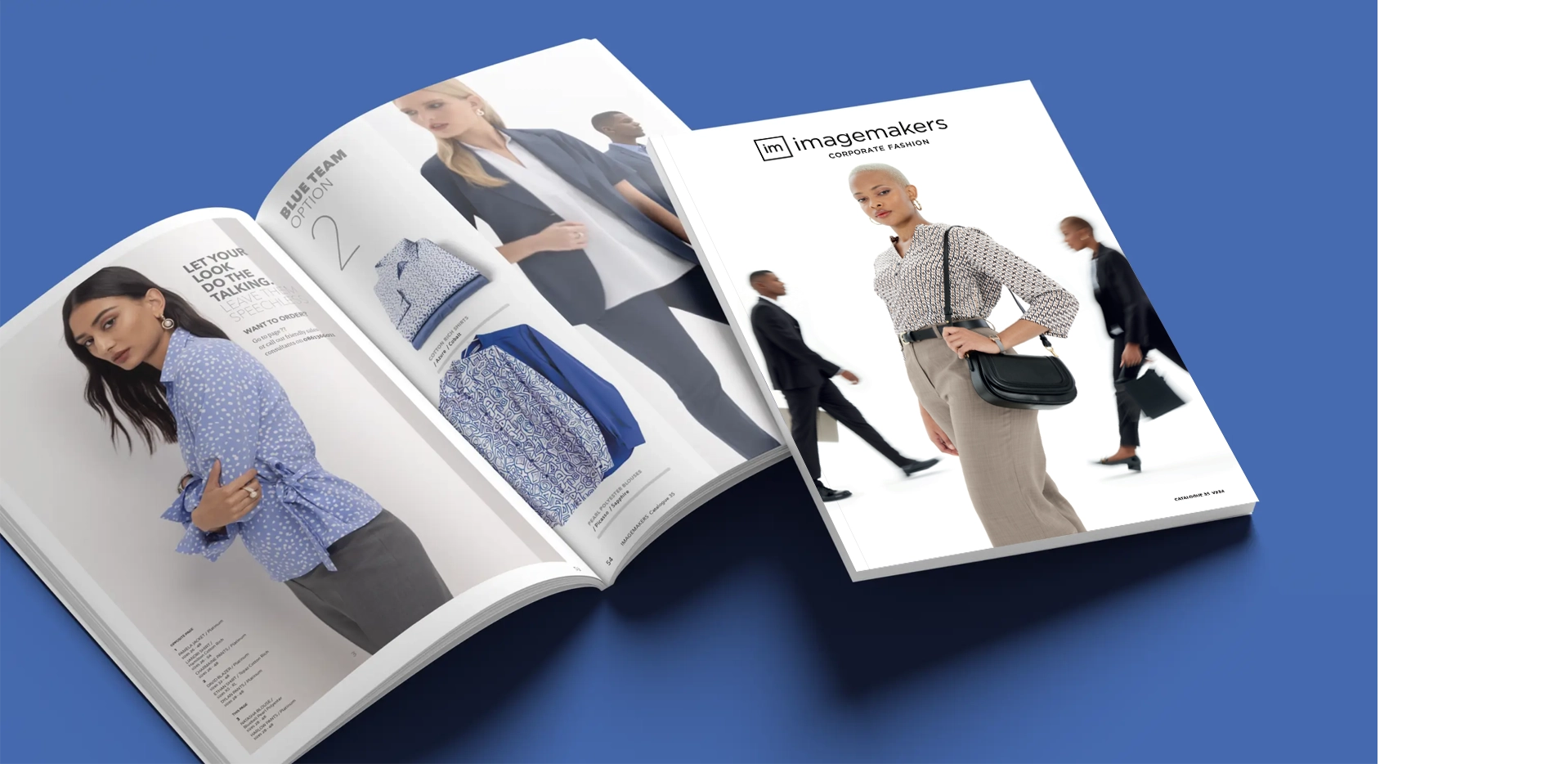
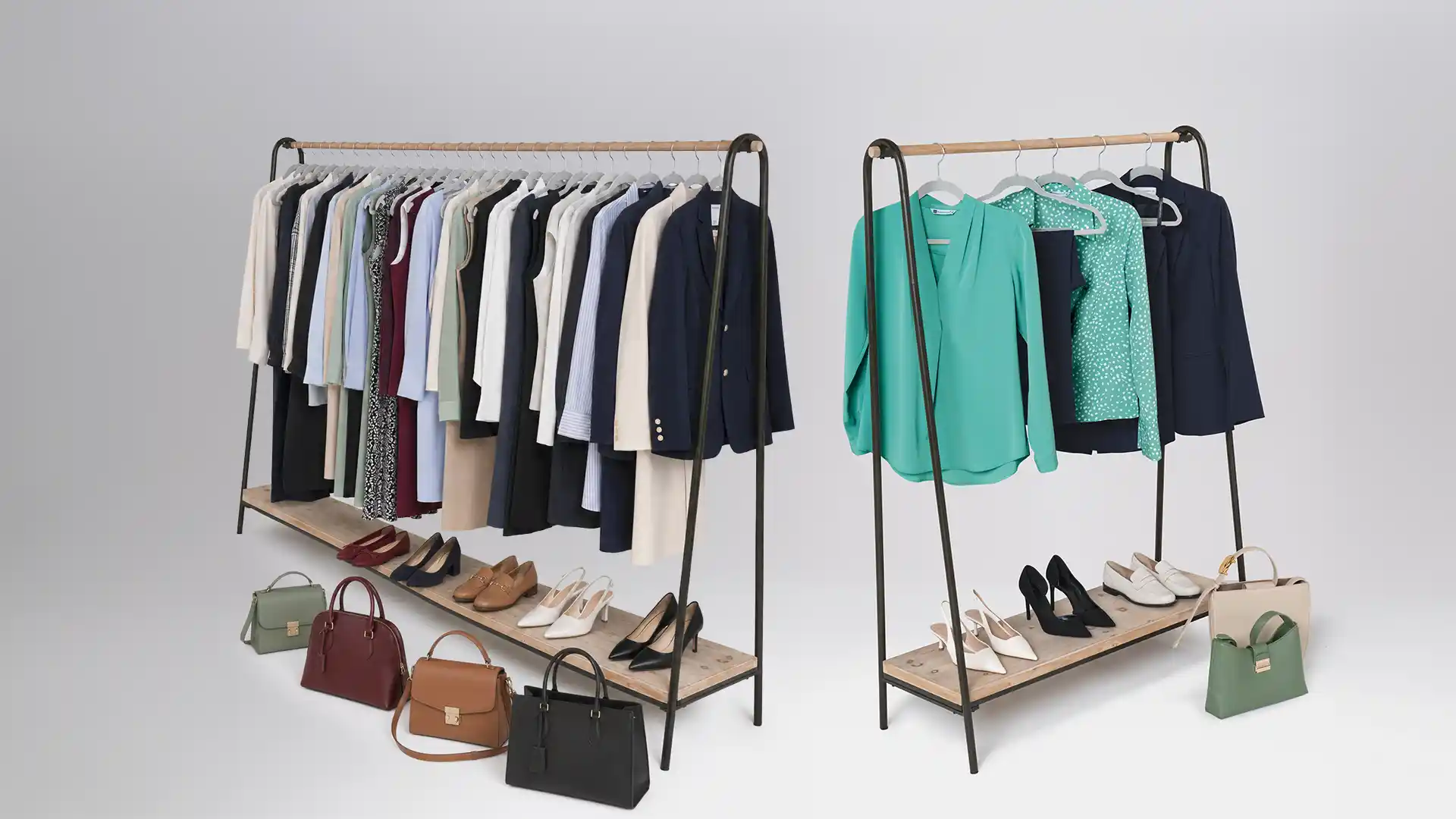
At Imagemakers we’ve been making professional clothing in South Africa for more than four decades. That experience means thinking beyond what a garment looks like when it leaves the factory to how it performs in the real working world.
Fabric selection, construction, colourfastness, fit, easy care and durability aren't particularly glamorous words. But they become considerably more interesting around wash number 40.
And there is a sustainability argument here too.
Research from circular-economy organisation WRAP has found that extending the active life of clothing can significantly reduce its carbon, water and waste footprints.
Sometimes the sustainability conversation becomes extraordinarily complicated, and when it comes to fashion this conversation isn't very 'sexy'.
One part of it isn't complicated. If clothing lasts longer, we don't need to replace it as often! Sometimes it takes us a while for us to cotton on - like putting wheels on luggage, it somehow took us until the 1970s to work that one out.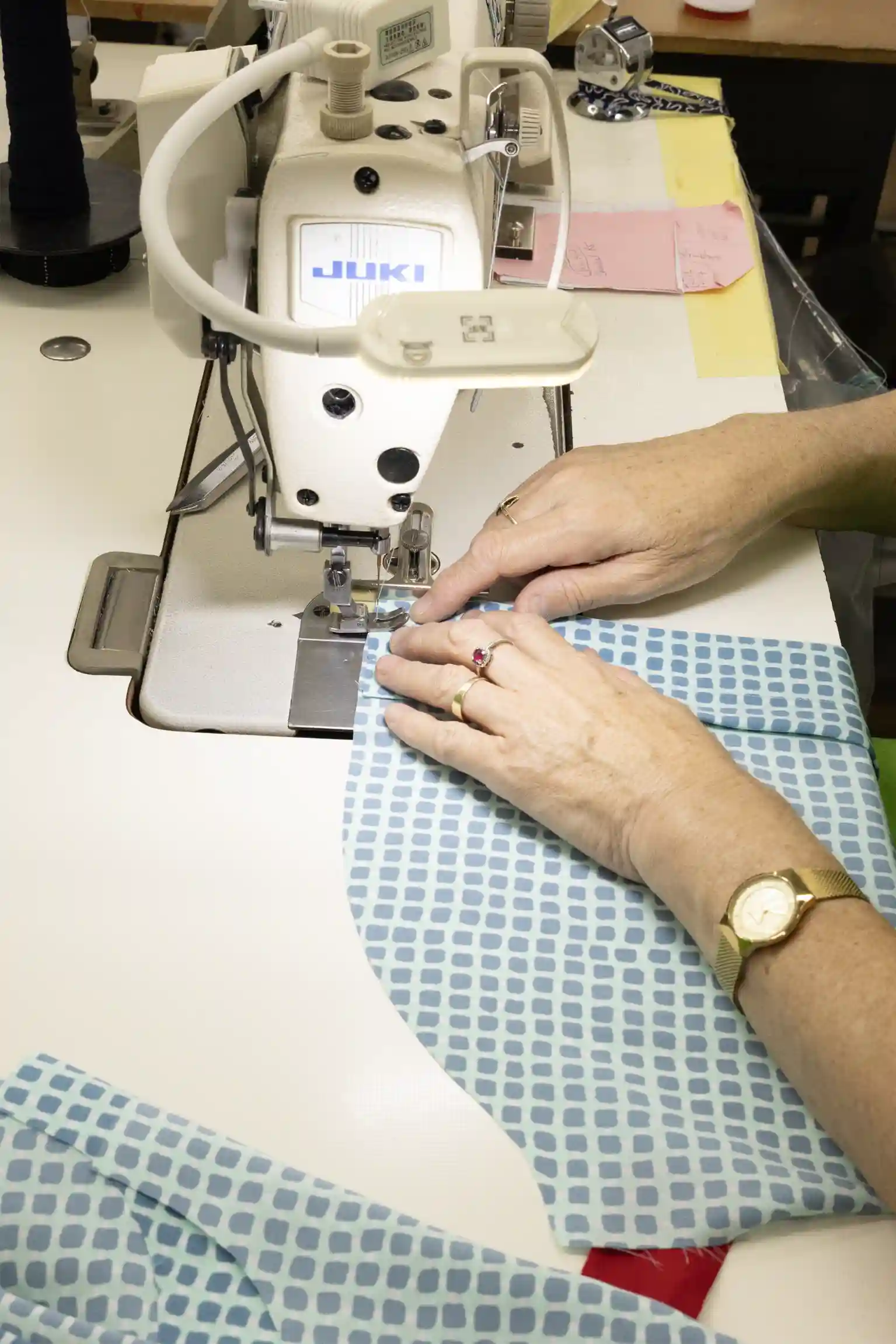
The Environmental Cost We Don't See at the Till
The financial calculation for you and the producer is only part of the story unfortunately. Textile production consumes resources and creates waste and pollution long before a garment reaches our wardrobe.
The European Parliament estimates that textile production is responsible for around 20% of global clean-water pollution, primarily through dyeing and finishing processes.
Synthetic textiles also create another problem we are all familiar with but most of us tend to turn a blind eye to: microplastics.
The European Environment Agency estimates that between 200,000 and 500,000 tonnes of microplastics from textiles enter the marine environment globally each year. That's the elephant in the room - and speaking of elephants 200,000 - 500,000 tons is the equivalent of 40 000 to 100 000 elephants! A year, polluting and pounding our fragile marine world.
Importantly, fibre shedding can be particularly high during the first few washes. The EEA notes that the high turnover associated with fast fashion therefore matters: constantly replacing clothes also means constantly introducing new garments into those early wash cycles.
So that bargain top actually leaves so much more behind than a 'cheap' receipt.
Governments are beginning to reach the same conclusion.
The European Commission's strategy for sustainable and circular textiles is envisaging a future in which textiles sold in Europe are more durable, repairable and recyclable. A future where consumers can benefit from higher-quality clothing for longer - from 19 July 2026, large companies covered by new EU ecodesign rules are prohibited from destroying unsold apparel, clothing accessories and footwear, subject to limited exemptions.
That is a significant intervention in an industry built partly around enormous volumes and rapid turnover.
This direction of travel is becoming difficult to miss:
Make better use of the clothes we produce - and keep them in use for longer.
So, Do Cheap Clothes Really Save You Money?
Well according to our exposé here - absolutely not. But actually… sometimes, they do.
A lower-priced garment that is well made, suits its purpose and gets worn repeatedly can represent excellent value.
Equally, an expensive garment worn twice can be spectacularly wasteful.
A designer label, sadly, does not come with a force field against bad decisions.
Price alone doesn't determine quality.
And putting words such as "premium", "conscious"or "sustainable" on a label doesn't automatically make a garment any of those things.
The real problem is disposability. When a low purchase price encourages us to buy more, wear garments for less time and replace them faster, the saving begins to disappear.
We pay again at the till. Another garment has to be produced.
Another garment eventually has to go somewhere when we're finished with it.
For workplace clothing, perhaps businesses should therefore change the question.
Instead of:
"What does each shirt cost?"
Ask:
"What will it cost to keep our team looking good for the next three years?"
Garment lifespan matters. Replacement frequency matters. Consistent sizing and continuity of styles matter. Employee comfort matters. And so does the time and administrative cost involved in continually replacing clothes that weren't designed for sustained professional use in the first place.
For businesses buying corporate wear or team uniforms, the cheapest quote on day one probably won’t be in year two.
Cheap and cheerful is considerably less cheerful when you're buying it for the third time.
Perhaps We Need a Better Definition of Cheap
Fast fashion didn't become a global phenomenon because consumers are foolish. It solved a genuine problem. It made fashionable clothing more accessible, gave consumers vastly more choice and allowed people to change their wardrobes without spending a fortune.
But somewhere along the way, we may have confused cheap to buy with cheap to own.
For the workplace, that distinction is particularly important.
Professional wear should survive trends as well as washing machines. It should be comfortable enough to wear repeatedly, consistent enough to represent a brand and durable enough that replacing it becomes the exception rather than the business model.
None of that means we need to stop enjoying fashion.
We aren't suggesting everyone wears the same sensible beige shirt until retirement. Heaven forbid.
It simply means we should expect more from the clothes we buy - particularly the ones we spend our working lives wearing.
Because perhaps fast fashion's biggest lie was never that the clothes were cheap.
It was convincing us that the price tag was what they cost.