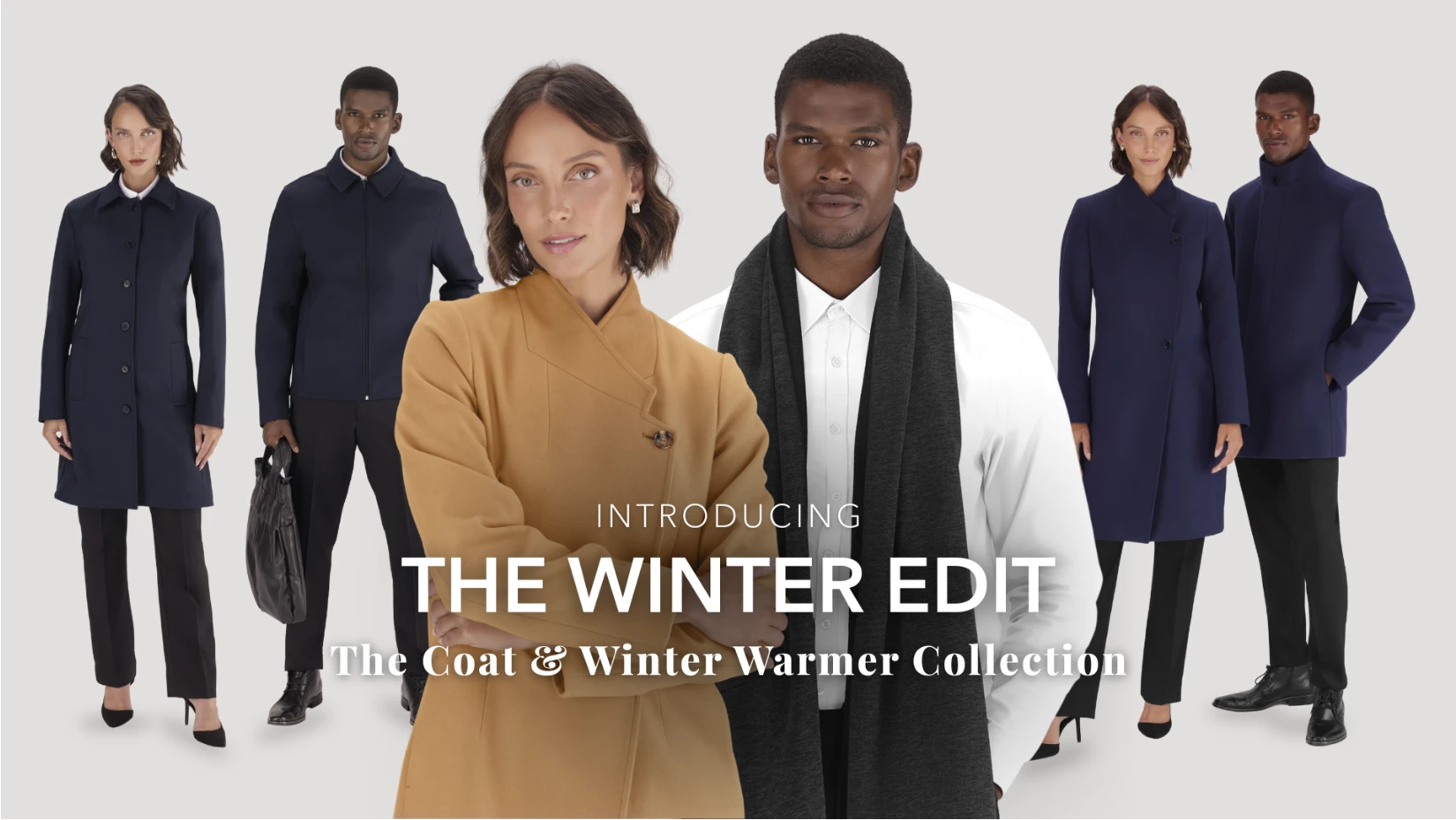


Winter dressing at work is rarely as simple and straight forward as just adding a jacket.
For most teams, it's home heating on, cold early starts followed by overheated offices, client meetings, and a constant shift between indoor and outdoor environments. The real challenge is never about staying warm - it's staying consistent, professional, and on-brand while doing it.
That's where well-considered corporate winter wear starts to matter.
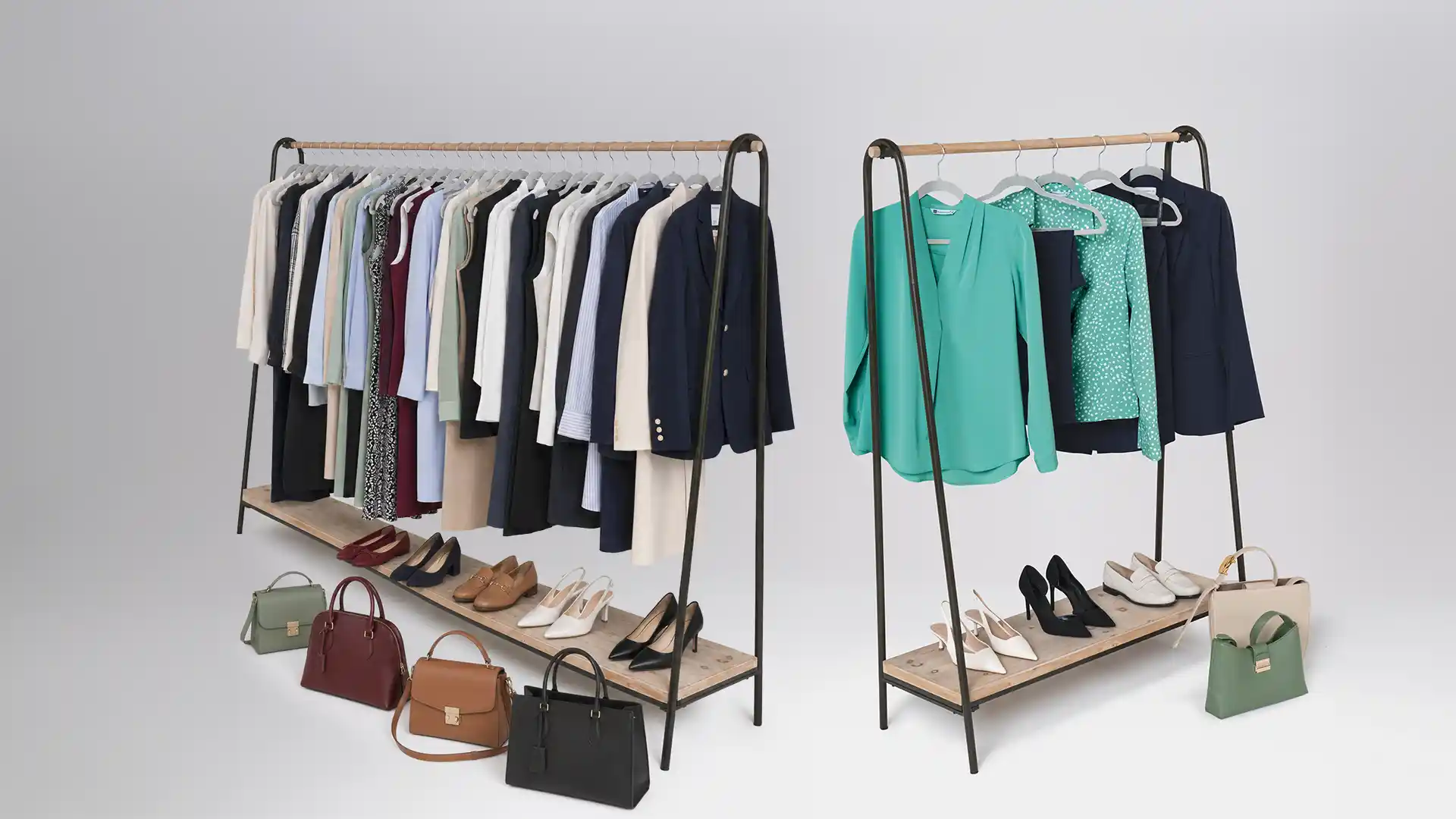
Enter 'The Imagemakers Winter Edit' - a collection built around structured coats, flexible knitwear, practical outer layers and refined finishing pieces. It's not about adding layers until you're warm or bulk dressing. It's about building a smart layered wardrobe that actually works for real teams across South Africa.
So, a 'Winter Edit' simply means a carefully selected collection of winter pieces designed to work together as a complete, coordinated look.
A quick look at what winter corporate wear should actually solve
Most businesses get their corporate clothing perfect for summer (well, with a little bit of Imagemakers help of course).
Then winter arrives… and everyone improvises.
Someone throws on a puffer jacket. Another wears a hoodie. Someone else layers something that's jaw dropping but not in a good way. Within a week, the team no longer looks like a team - especially in client-facing environments.
This is something we've touched on before in Imagemakers' recent thinking around how real-world conditions shape what people actually wear to work, particularly in South African cities where climate and environment vary more than people think. That same principle applies even more in winter - where inconsistency shows up faster and more visibly. Basically, take the different climates across SA and then compound the problem.
This is where businesses in Cape Town, Johannesburg, Durban and Pretoria start to feel the impact most. Not because of extreme cold - but because of variation.
• Cape Town: damp, windy, unpredictable
• Johannesburg: cold mornings, warm afternoons, heavy aircon indoors
• Durban: less cold, but still needs breathable layering
• Pretoria: dry cold with sharp temperature swings
• Bloemfontein and Kimberley: inland and freezing!
A single winter garment rarely solves all of that.
Which is why the strongest corporate uniforms for winter are built in layers - not as one-off fixes.
The outer layer sets the tone (Melton coats)
There's a reason coats still carry weight in corporate environments.
They immediately sharpen a look. They bring structure. They signal intent.
In the Winter Edit, the Melton coats are the most structured part of the range - designed to maintain a clean, professional silhouette while offering proper warmth. The fabric itself is described as thick, smooth and soft yet structured, which is exactly what you want when a garment needs to hold its shape throughout the day.
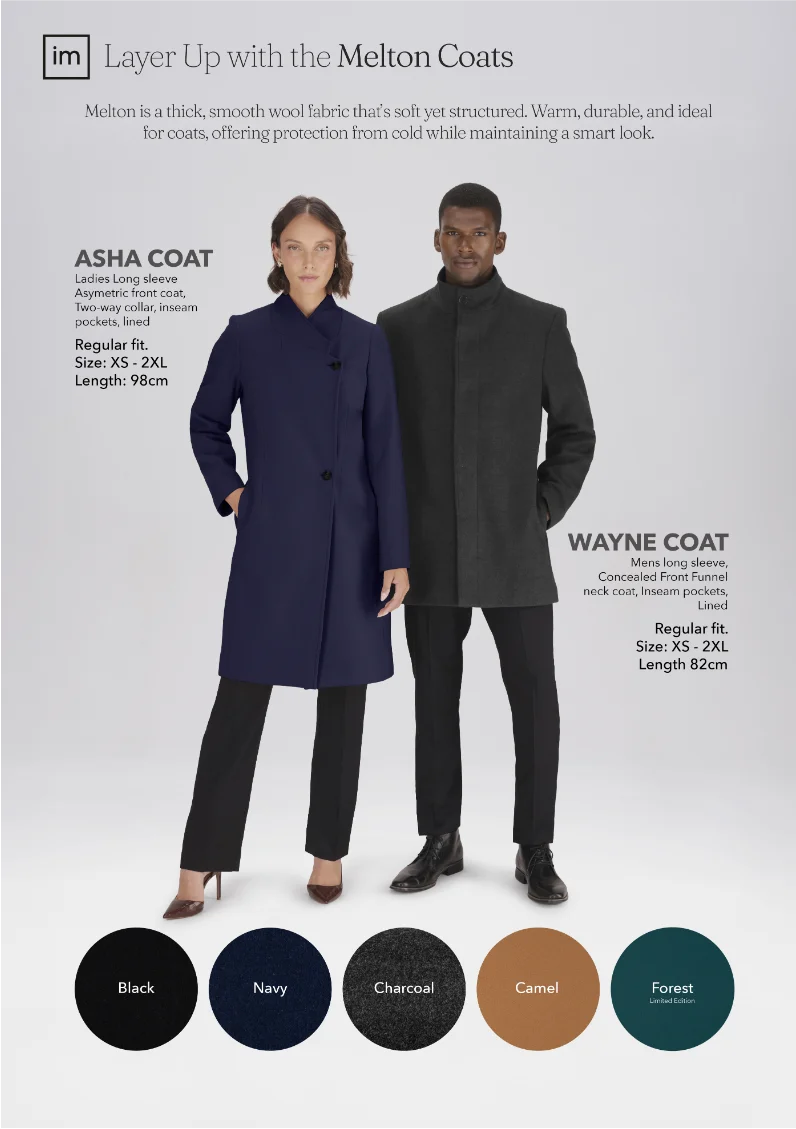
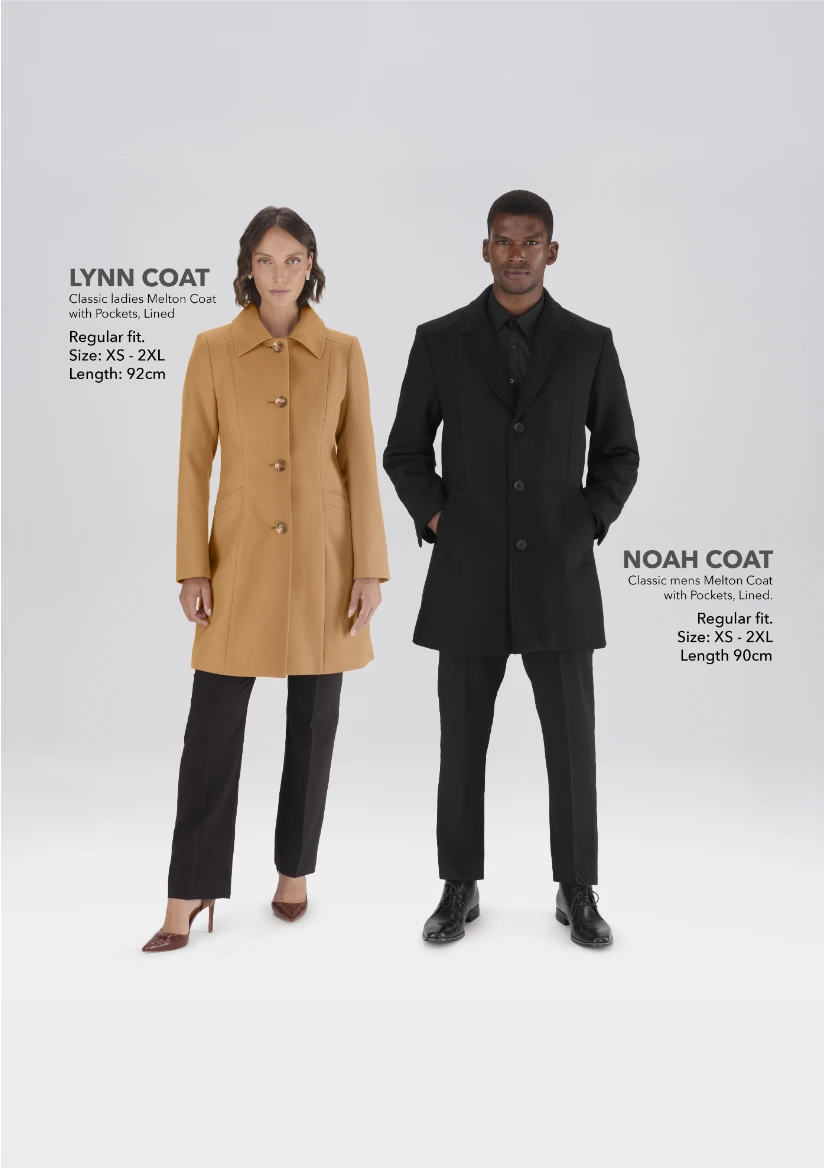
These are particularly effective for:
• Front-of-house teams
• Client-facing roles
• Management and leadership teams
• Businesses wanting a more premium corporate look
It also links back to an earlier Imagemakers perspective on how clothing shapes perception and belonging in the workplace - where first impressions are often formed before a word is spoken.
From a corporate wear supplier in South Africa perspective, this is where consistency really starts to show. When a full team arrives wearing structured outerwear that aligns, the brand feels coordinated and connected.
The colour palette also matters more than people think:
• Navy and charcoal = safe, consistent rollout
• Black = timeless and formal
• Camel = softer, more premium feel
• Forest (limited) = subtle differentiation
Done right, this isn't "winter clothing." It becomes part of the company's visual identity.
Not every team needs a coat (Melton knit jerseys)
This is where many businesses get it wrong.
They assume winter = coats for everyone.
But in reality, a lot of teams need something more wearable, something that works across a full day without feeling heavy or restrictive.
That's exactly where the Melton Knit Jerseys sit.
They offer warmth, but with flexibility. Structured enough to look professional, but easy enough to wear from morning through to late afternoon without needing to take it off every other hour.
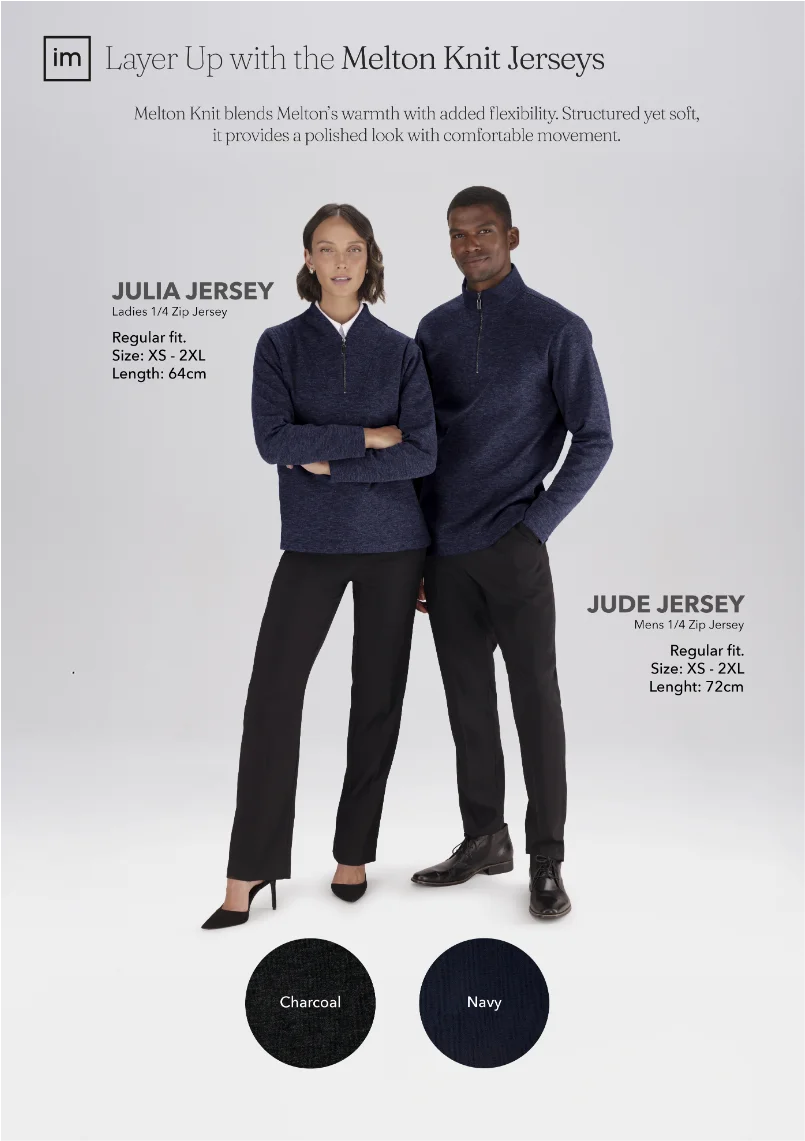
They're ideal for:
• Office-based teams
• Customer support roles
• Internal-facing departments
• Hybrid or flexible working environments
From a corporate clothing supplier perspective, these types of garments often become the most used items in a uniform rollout - because people actually enjoy wearing them.
This also connects to a broader point we’ve explored before - that the way clothing fits the individual matters just as much as the garment itself. In our article What Body Shape Are You? The Corporate Wear Guide That Actually Fits, we look at how different body shapes interact with team uniforms, and why a one-size approach rarely works in practice. The same thinking applies to winter layering - the best results come from choosing pieces that not only align with the brand, but also work comfortably and confidently for the people wearing them.
And that matters more than any spec sheet ever will.
The most practical layer (soft shell jackets)
Soft shells have quietly become one of the most important parts of modern corporate workwear.
Not because they look impressive - but because they solve real problems.
Movement, weather, breathability, comfort.
The Winter Edit positions soft shell jackets as lightweight, breathable and water-resistant - but importantly they are specifically designed for movement without restricting mobility.
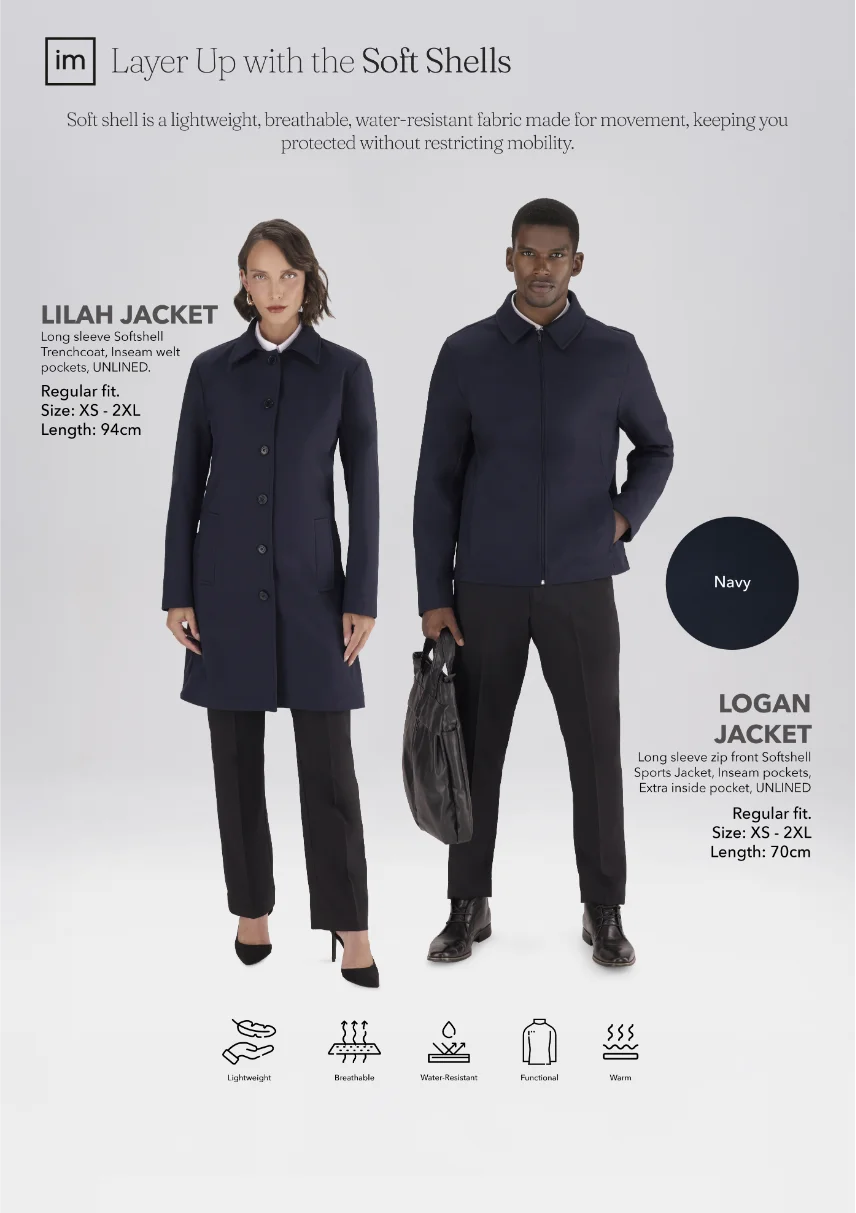
These are particularly useful for:
• Mobile teams
• Field staff
• Sales teams on the move
• Staff working across multiple locations
• Businesses with mixed indoor/outdoor environments
This aligns with a broader shift we're seeing across Imagemakers projects - moving away from "one uniform fits all" thinking, and towards corporate clothing solutions that reflect how people actually work day to day.
In cities like Johannesburg and Pretoria, where mornings are cold but afternoons warm up quickly, this kind of layer becomes invaluable.
It's not trying to replace a coat. It's solving a different problem entirely.
The finishing layer most teams overlook
It's usually the small things that complete the look.
The Winter Edit includes:
• Polo tops (layering pieces)
• Chunky winter scarves
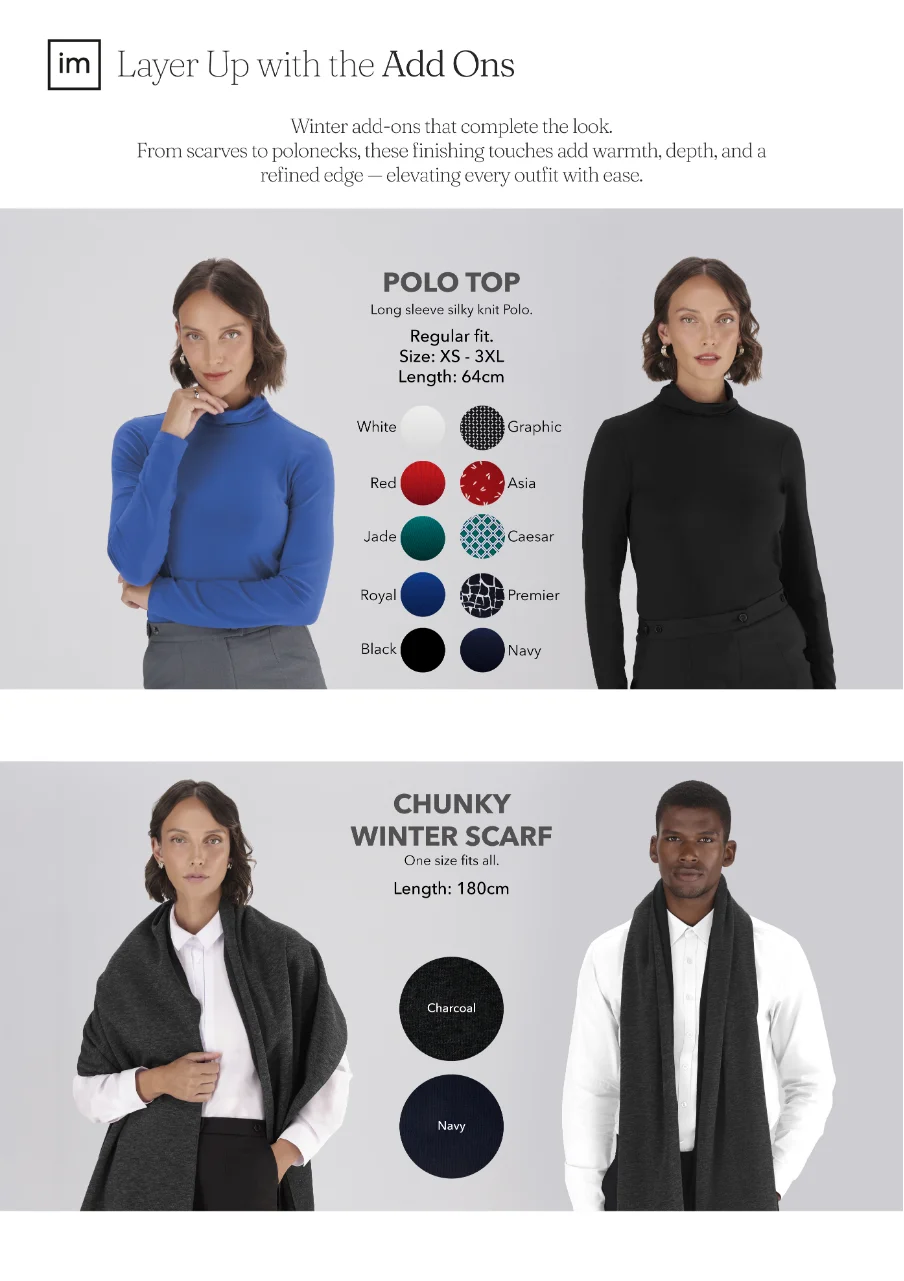 These aren't just accessories.
They:
• Add warmth without bulk
• Bring colour and depth
• Help unify the overall look
• Finish the outfit properly
For corporate clothing in every city across South Africa, this is often the difference between a team that looks "fine" and one that looks genuinely well put together.
Especially in client-facing environments.
One uniform doesn't fit every role - and that's okay
There's a common misconception that consistency means everyone must wear exactly the same thing.
In reality, consistency is really about alignment, not duplication.
A well-planned winter rollout might look like:
• Coats for front-facing staff
• Knit jerseys for office teams
• Soft shells for mobile roles
• Add-ons for selected departments
Same brand. Same feel. Same standard.
This is where working with an experienced corporate wear supplier in Cape Town or Johannesburg becomes important - because it's not just about garments, it's about how those garments are applied across a business.
Winter is where corporate clothing either holds up - or falls apart
Winter is where things get tested. Summer team uniforms are easy in comparison.
You quickly see:
• whether garments were chosen properly
• whether teams feel comfortable
• whether the look still holds together
• whether the brand still shows up (and shows off) consistently
And this is often where businesses either maintain a strong presence… or lose it.
That's why winter layering isn't just practical - it's strategic.
The Imagemakers approach to corporate winter wear
At Imagemakers, winter isn't treated as an add-on.
It's approached as part of a full corporate clothing program - one that considers:
• how teams actually work
• how environments change through the day
• how different roles need different solutions
• how to maintain brand consistency across all of it
Whether working with businesses in Cape Town, Johannesburg, Durban, Pretoria or across South Africa, the goal remains the same:
To build corporate uniforms that people want to wear - and that businesses are proud to put forward.
The Winter Edit is simply one expression of that thinking.
FAQs: Corporate Winter Wear & The Winter Edit
1. What is the Winter Edit in corporate clothing?
The Winter Edit is a curated selection of garments designed to work together for colder months. Instead of choosing items individually, it provides a coordinated approach to team workwear - combining coats, knitwear, jackets and accessories into a complete winter solution for teams.
2. What is the best clothing for winter in a corporate environment?
The best corporate clothes for winter are layered. Rather than relying on one heavy item, a combination of knit jerseys, structured coats and lighter outer layers allows teams to stay comfortable throughout the day while maintaining a consistent, professional look.
3. How does the Winter Edit help businesses choose corporate uniforms?
The Winter Edit simplifies decision-making. Instead of reviewing an entire catalogue, businesses can focus on a smaller, considered range of garments that are designed to work together - making it easier to roll out consistent corporate wear across teams.
4. How should businesses approach corporate wear for ladies in winter?
With corporate wear for ladies, the focus should be on layering and fit. Pieces like tailored coats and structured knitwear allow for warmth without bulk, while still maintaining a polished and professional appearance.
5. Can the Winter Edit work across different roles within a company?
Yes absolutely, that’s the intention. The Winter Edit includes a mix of structured and more flexible garments, allowing businesses to apply different layers to different roles while still maintaining a unified look across the entire team.
6. What makes ladies corporate wear practical for winter conditions?
Practical ladies corporate wear in winter should provide warmth, allow movement and remain comfortable throughout the day. Layering pieces that can be added or removed easily tend to work best in real working environments.
7. Why is layering important in winter workwear?
Layering allows employees to adjust to changing temperatures throughout the day - from cold mornings to warmer indoor environments. It also helps maintain a consistent look, rather than relying on mismatched garments, accessories and outerwear.
8. How do you keep winter uniforms consistent across a team?
Consistency comes from planning. Providing coordinated layers - rather than leaving individuals to choose their own - ensures the overall look remains aligned with the company's brand and it's professional standards.
9. Does winter workwear need to change depending on the city?
Often, yes. Businesses operating across South Africa need to consider different conditions - for example, colder mornings in Johannesburg, damp weather in Cape Town, or more moderate climates in Durban - and choose workwear that adapts accordingly.
10. How do you choose the right mix of garments in a Imagemakers Winter Edit?
The right mix comes down to how your team works day to day. A well-balanced Winter Edit typically includes a combination of structured outerwear, flexible knit layers and practical jackets, ensuring your uniform supports different roles while at the same time, still maintaining a consistent overall look. Simply click our Winter Edit ideas and choose or enquire here.