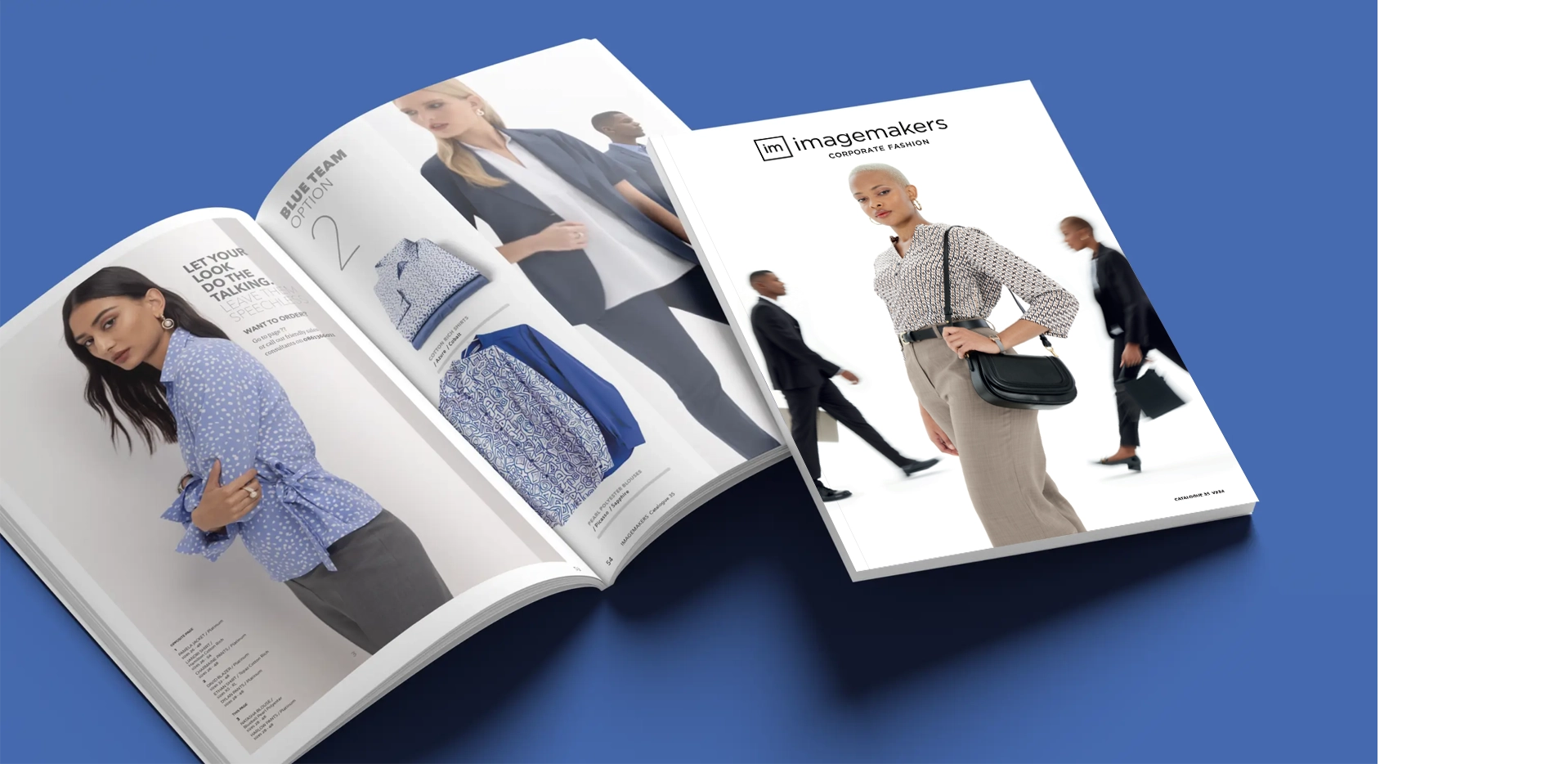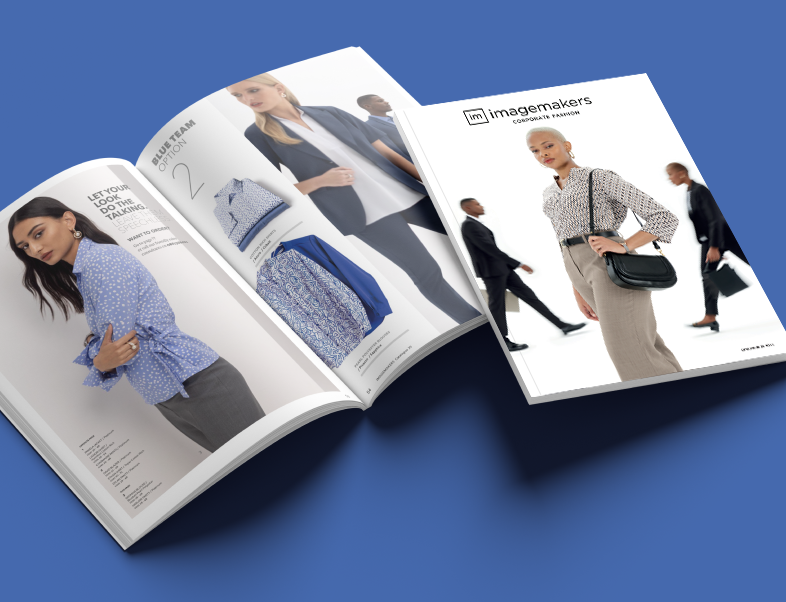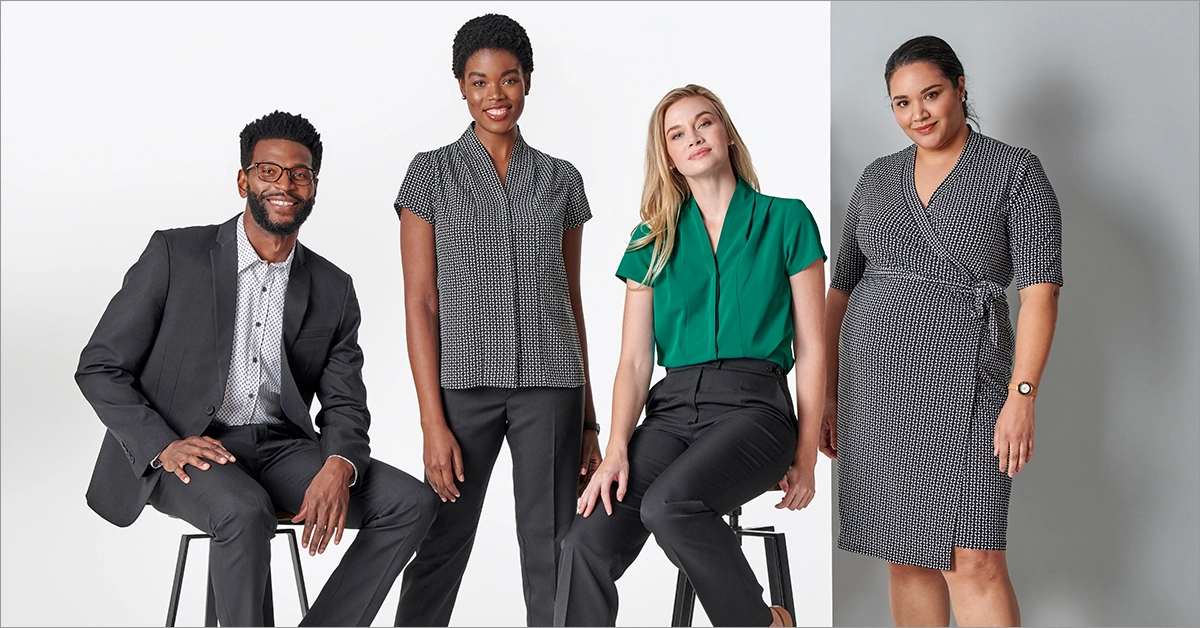


Choosing a new corporate uniform isn't as simple or easy as just picking a professional looking shirt and a pair of matching trousers. If you've done this in the past, we forgive you and 1000's of others - studies show it's rather a symptom of stretched resources and a lack of understanding as to how important a decision this is - here's a study on how a uniform mistake could affect your bottom line. So... please, pretty please, do not just pick a shirt and matching trousers. If you're going to spend the money, spend it wisely, because a good uniform has a very specific job to do - it needs to look smart, feel comfortable, support your brand, work for every role in your business, and be practical enough for your amazing, much treasured staff to wear (and show off) every day.
As South African companies prepare for what 2026 has in store - and 2026 is looking like it could be a good one (and a heck of a lot more positive than many other countries in the world right now - lets pay our collective gratitude forward!). Anyway... sticking strictly to script, whether it's brand updates or growing teams, many companies are reassessing their staff uniforms and what makes actual, tangible sense for their day-to-day activities in their specific environments. This guide is here to take you - one step at a time - through the potential minefield that is choosing your teams new, modern, practical wardrobe.

1. Start with the actual needs of your team (not just what looks nice)
Before deciding on colours or styles, start with the realities of the people who will wear your work uniform every day.
Think about:
-Are they office-based, customer-facing or frequently moving around?
-Do they switch between environments (heat, air-conditioning, outdoor areas)?
-Do different roles require different levels of formality?
-Are you dressing both men and women - in diverse range of different corporate wear ladies sizes and fits?
A front-desk team, a warehouse team and a sales team all have very different needs - but with a thoughtful plan, they can still look like they belong to one unified team and organisation. Understanding these needs early avoids returns, discomfort and wasted spend.
2. Choose colours and fabrics that work for both your brand and the job
Colour is often the first thing people focus on, but practicality should really be the first thing you think about and this should rather guide your choices. The most successful corporate wear programmes usually combine:
- A neutral base (navy, black, charcoal, stone)
- A brand-aligned accent (blouse colours, trims, accessories)
This creates a unified look without being overwhelming.
Then there's the fabric - this is a major factor in comfort and longevity. South African workplaces deal with warm weather, cool offices and long shifts. When selecting work clothes, consider:
-Breathable, comfortable blends
-Crease-resistant fabrics
-Colourfast dyes
-Pieces that work across both men's and women workwear ranges
The right fabric makes a uniform feel wearable, not restrictive.
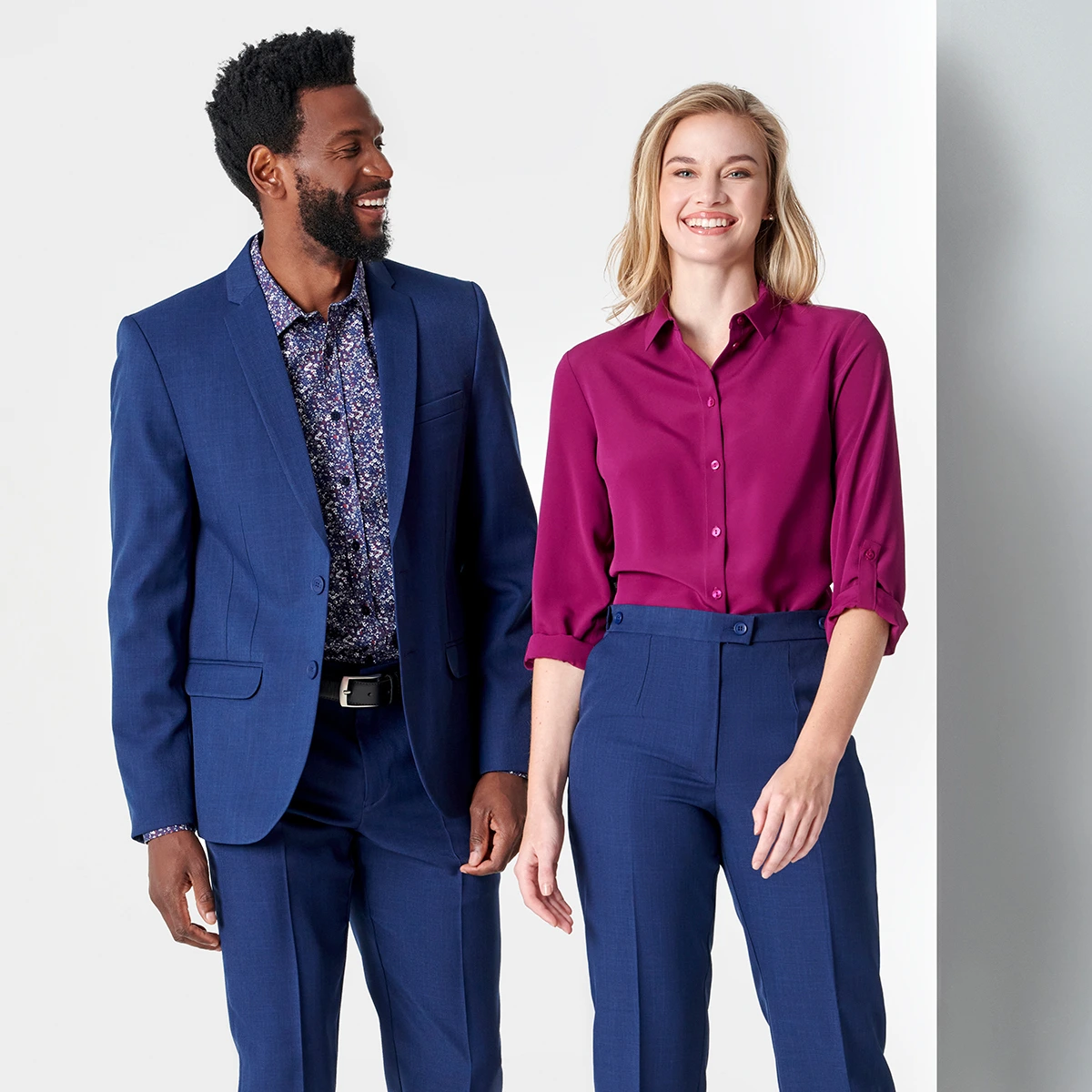
3. Fit is everything - confident staff represent your brand better
Fit is one of the biggest reasons staff resist uniforms. A well-designed uniform doesn't just look good on a hanger - it fits real body shapes, not mannequins and models.
Your range should include:
-A proper size curve
-Multiple cuts where needed
-Stretch for comfort
-Inclusive, well-thought-out options for women workwear
When people feel good in what they wear, their confidence and professionalism follow naturally.
4. Aim for cohesion, not identical outfits
The strongest teams don't look cloned - they look coordinated.
Think in terms of:
- A shared colour palette
- Fabric families that complement each other
- A consistent level of formality
- Variations between departments that still feel connected
For example, reception might wear blazers, while admin teams wear a relaxed two-piece look from the same team clothing direction (and collection). The overall effect will feel polished and intentional.
5. Decide how many sets each staff member actually needs
A common oversight is underestimating garment quantities. Different industries require different numbers of work clothes per person:
- Hospitality & housekeeping:3-5 sets
- Retail & client-facing roles:2-3 sets
- Office teams:usually 2 sets
- Hybrid roles:1-2 sets depending on frequency in-office
Wearing and washing the same clothing five days a week dramatically shortens its lifespan. Not to mention the additional time, stress and cost of multiple wash loads. Additional sets improve presentation, staff satisfaction and overall happiness (every little bit helps) and reduces replacement costs.

6. Build a realistic budget for 2026
When budgeting for corporate wear, include:
- Total number of staff
- Department differences
- Seasonal garments
- Garment lifespan
- Replacement cycles
- Whether you're phasing in or rolling out all at once
- New staff arrivals
And here's a shameless plug - local production is actually pretty important because reliable uniform suppliers (i.e. made in South Africa) helps avoid international shipping delays and extras costs and ensures consistent quality and easy returns - especially valuable if you're searching for dependable corporate clothing suppliers in Cape Town and surrounding regions (psst - we are based just outside the Cape Town city bowl).
7. Plan your uniform rollout timeline properly
A professional rollout typically includes:
-Consultation with a long-standing reliable outfit like Imagemakers
-Style and colour selection
-Fittings or size curve planning
-Production
-Quality checks
-Delivery
For most companies, this takes 6-12 weeks, depending on quantity and complexity. Larger rollouts or seasonal peaks may require more time, so planning early for 2026 is a very smart move.
8. Avoid the five most common uniform mistakes
These are the issues we see most often:
1.Picking colours based solely on digital mock-ups
Fabric looks different in person - always try and look at and test physical samples.
2.Not involving staff in the process
Even minimal input helps avoid resistance later.
3.Ordering too few sets
Fabrics wear out quickly under heavy rotation.
4.Mixing retail clothing with structured corporate wear
It leads to an inconsistent and unprofessional appearance.
5.Ignoring body diversity
A single cut rarely suits everyone - especially in corporate wear ladies lines.
9. When in doubt, work with the specialists
Planning uniforms seems simple - until colours don't match, sizes vary, or garments wear out too fast. Talking to experienced uniform suppliers helps prevent these issues.
A uniform specialist can help you:
- Choose fabrics that last
- Build a cohesive wardrobe
- Get your sizing right
- Plan quantities correctly
- Avoid common logistical mistakes
- Roll out smoothly across branches
- Have a support plan when staff numbers increase
Even a short consultation (simply click on the call to action below) can save weeks of trial and error.
Final thoughts for 2026
A well-planned uniform programme helps your team look united, confident and aligned with your brand. When people feel comfortable in what they wear each day, it shows in their attitude, service and overall presentation... and you'll see it flow through into your bottom line.
If you're preparing for a 2026 rollout or need guidance choosing the right wardrobe for your team, we can help you put together a practical, cohesive and easy-to-maintain solution that works just for you. And there's no cost in a quick WhatsApp message. Try us, we're sure it'll be the kind of surprise you'll love.